
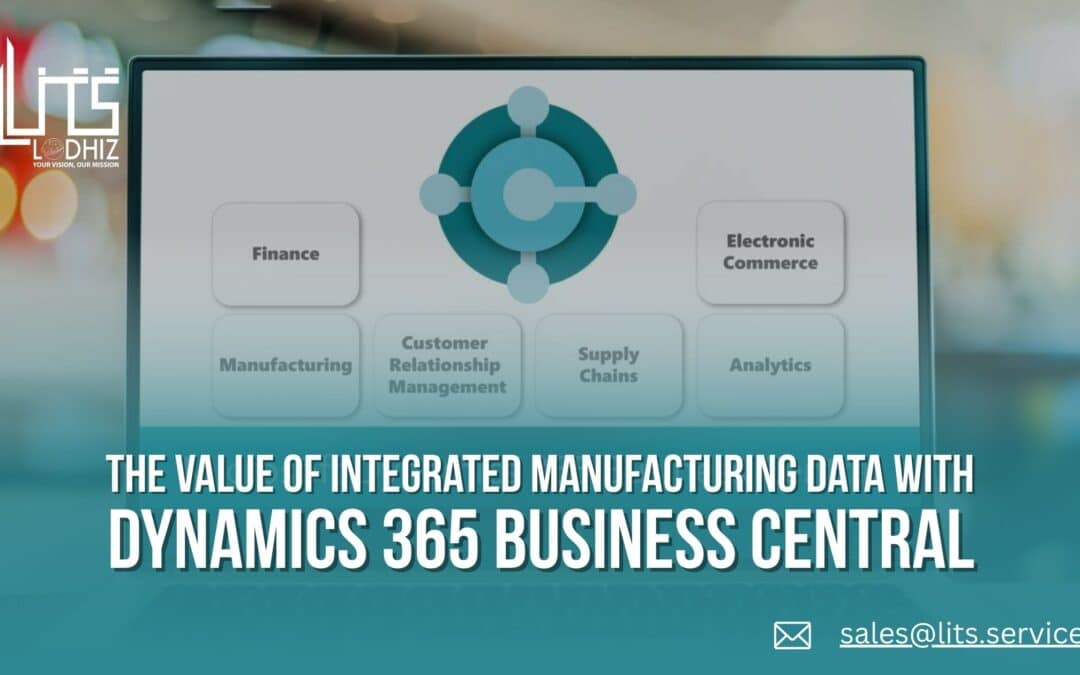
A vicious competition is evident in the manufacturing sector. Therefore, manufacturers have to be proactive to stay ahead
While many factors impact production cycle, the role of data can’t be overlooked. Data is critically important in the data-driven environment, as it serve as the basis for determining operational success.
As ERP is effective for data management, it is interesting to see how Business Central Manufacturing 2025 becomes an important solution for the entire manufacturing process.
What makes data critical for manufacturing?
Manufacturers often deal with fluctuating customer demand, supply chain disruptions, and increased pressure to deliver products on time. Effective utilization of manufacturing data helps organizations address these concerns.
Integrated manufacturing data here refers to production data, inventory data, planning and scheduling data, and more. When this data is spread across difference systems, it creates inefficiency in inventory tracking, production schedules, and the decision-making process. Manufacturers don’t get a complete view of what is happening across the production operations.
This is where Dynamics 365 Business Central features become relevant for manufacturers.
Business Central Manufacturing 2025
Microsoft Dynamics 365 Business Central provides a unified platform for manufacturing operations. Instead of data being shared across multiple systems, Business Central brings together various data into a single, unified place. This let teams from various departments access accurate, and updated information.
This unified flow of data eliminates irregularities that occur when data is available across different systems. It makes sure that every operational plan is based on accurate data.
Here are the various scenarios where unified data turn advantageous.
Production schedule can be based on inventory availability
This means production planning can be carried out using actual inventory levels. Manufacturers can schedule or start production only when they have the required raw materials. As the scheduling is genuine, there is no need to rely on assumptions, estimates, or outdated data. Production managers can adjust schedules depending on the availability of raw materials for making sure smooth and efficient operations.
Sales forecast are aligned with manufacturing capacity
Sales forecasting and manufacturing must work hand in hand. If the production can’t meet the sales forecast, it creates delays and customer dissatisfaction. Production planning is dependent on machine capacity, labor availability, and resources.
Integrated data makes sure that sales teams can forecast demand as per actual manufacturing capability, considering workforce availability, machine capacity, and resource limitations. Manufactures can commit only to what they can genuinely produce and deliver on time. The alignment of sales forecasting with manufacturing capacity helps avoids overpromising.
Procurement decisions are based on accurate stock levels
Procurement decisions are challenging when data is scattered across different systems.
Procurement plays an important role in the manufacturing process. It is related to identifying and purchasing raw materials needed for manufacturing. With unified data, teams will get a clear picture of the quantities needed from vendors.
With integrated manufacturing data, procurement teams know what materials are needed for upcoming production and can raise purchase requests or quotations. This makes sure the purchasing is well-planned and affordable.
By working with same data, teams can coordinate more effectively, respond quickly to issues, and make decisions that improves the manufacturing process.
Improve Manufacturing Operations with Business Central
Business Central manufacturing helps businesses manage all aspects of the manufacturing lifecycle in a unified platform. This benefits in production planning, optimizing inventory management, simplifying procurement, production floor supervising, and decision-making. The outcome of this is improved manufacturing with greater visibility.
The centralized data helps gain insights into production performance, inventory levels, customer demand, and cost. This empowers managers to make strategic decisions that drive growth.
Business Central Inventory and Planning
Business Central inventory and planning is exceptional. The ERP provides advanced inventory management feature that gives total visibility into stock levels across warehouse, bins and other storage facilities. The capability promotes manufacturing with real-time inventory tracking and automated replenishment. It supports traceability through batch and lot management.
The real-time inventory management makes sure that required raw materials are available for production. The integration with manufacturing process improves operational performance.
Business Central ERP provides planning features to make sure production is efficient and timely. Organizations can create production planning based on actual demand, forecast and sales orders. Also, material requirement planning and capacity planning are well supported by the platform.
In essence, Business Central makes the manufacturing process efficient with advanced inventory and planning tools.
Important Dynamics 365 Business Central Features for manufacturing
Business Central is an advanced ERP from Microsoft integrated with the manufacturing module. The platform goes beyond traditional manufacturing with advanced tools and capabilities. This helps manufacturers achieve their production goals with greater efficiency. Some stand out Dynamics Business Central features include:
Bill of Materials provides a master list of components, subassemblies, and raw materials required to manufacture a finished product.
Production orders define what needs to be manufactured and in what quantity. It helps manufacturers plan, execute, and production efficiently.
Capacity planning helps with analyzing and managing the production resources such as machines, labor, and production floor. This helps organizations meet demand.
Business Central supports real-time analytics for the analysis of data. The insights generated from analysis can be viewed through dashboards.
Business Central Shop Floor Control
The advantage of Business Central ERP is that it provides real-time visibility into production floor. The real-time tracking of machines, labor, and raw materials let managers know status of the production floor and gain control over the floor. This helps them identify issues and take corrective actions before small problems enlarge.
Business Central Shop Floor Control transforms manufacturing process with greater operational efficiency and customer satisfaction.
Maximize Manufacturing Efficiency with Integrated Manufacturing Data
Business Central stands out with unified data approach. This makes it suitable for manufacturing operations. Processes related to inventory, planning, workforce, and resources are united to maintain precise production control. The advanced AI, automation, analytics, and reporting take operations to a new level.
Your path to Business Central Manufacturing 2025 can be achieved with LITS SERVICES. A reliable partner in accelerating transformation, this Microsoft Dynamics 365 solution provider positions your business to gain new heights in manufacturing processes with Dynamics 365 Business Central features.
To learn more about this comprehensive ERP for manufacturing, you can connect with our Dynamics 365 professionals today.
Frequently Asked Questions (FAQs):
What is Business Central inventory and planning?
Business Central provides inventory and planning capabilities that help manufacturers to gain control over their inventory and production planning. The solution keeps track of raw materials in real-time, helps schedule production based on actual demand, and calculate the materials for production automatically.
What makes Business Central stand out for manufacturers?
The ERP unifies production, inventory, planning, and shop floor data in one platform. This gives real-time visibility into all aspects of manufacturing process, and also helps gain control over resources and decision-making.
How are insights generated?
Business Central provides built-in analytics for analyzing data from inventory, production, and purchasing. The analytics analyze data to provide insights into manufacturing performance and other aspects. These insights are beneficial for decision-making process.